Winter temperatures near Col, de Bise,
ca. 1800m asl in the Haute-Savoie
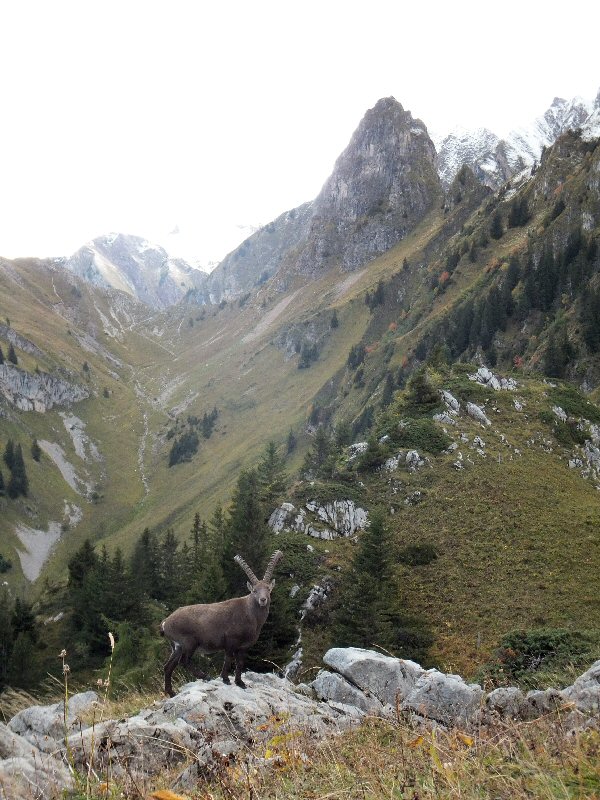
photo taken about 1700 m asl, not far from Col de Bise (20 min walk to the right of the photo)
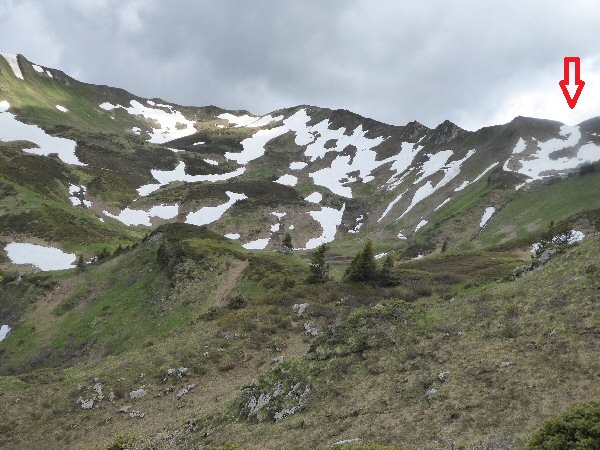
Col de Bise ca. 1900 m asl (ca. 20 min walk from logger)
Over 30 years of hiking, I have spent many weeks in the Haute-Savoie in the mountains toward the end of Lake Geneva (Lac Leman). This is the area travelled through during the first part of the GR5 trail from the lake.
I have been camping at ca. 1800 - 2000 m asl in spring, summer and autumn in various weather conditions. I have been roasted in the summer heat and frozen in the first flurries of an autumn snow storm. I have enjoyed a cool breeze on a hot summers day and hidden beneath my wind proof sleeping bag in autumn gales - which sound like steam trains running around the cliffs and passes. I marvel at the beautiful mountain goats in this area who seem to patiently put-up with what ever nature throws at them.
I wondered how cold it might get at this altitude (ca. 1800 m asl) in the depths of winter, so I decided to use a temperature data logger to find out.
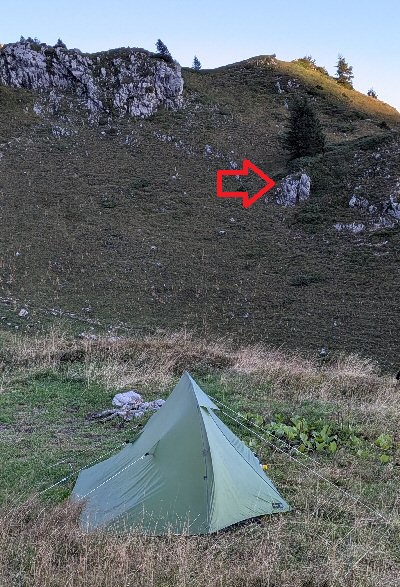
The picture shows the rough idea where the temp. data logger was positioned
46° 21' 00.24 N, 6° 45' 39.19 E, 1805 m asl
Temp logger placement
In September 2025 I put a Lasco pro data logger (see links below) in a water tight poly container and hid it a crevice in some rocks under some low lying myrtle bushes on a west facing slope. You can see Col de Bise from the logger location, which was about a 15 min walk away. Col de Bise was about 100m higher in altitude and the col is a lot more exposed. But in this location the logger would stay put so I could find it again the next year. In early June 2026 I visited the spot to pick up the logger, and took it home to analyse the data.
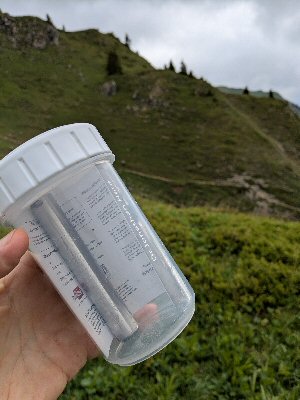
The temperature logger in its poly container after a winter (June 2026)
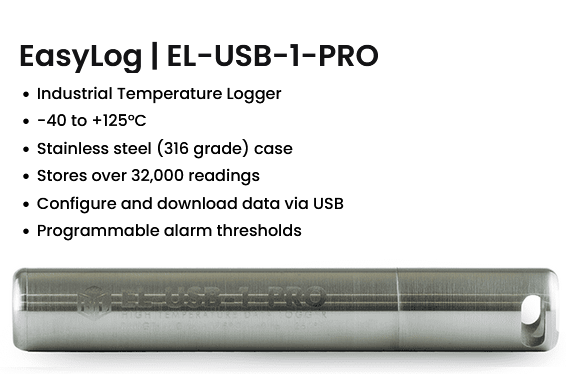
The data logger can be programmed to start at a particular time (or straight away) and set-up to log at various rates. You can also buy special batteries for the logger if its is going to be used in extreme temperatures. The pro version is built into a metal water tight (o-ring sealed, IP 67) tube about 11cm long by 1.7 cm diameter. I put this into a screw lid poly container i) to add another level of weather protection and ii) so it was easier to find later on and could not for example, fall down a crack etc. I included some information about myself and this website along with the logger in case it did get blown out and someone found it.
As I wasn't quite sure when I would get back to pick up the logger I set it up so it would record for over a year. The data logger can save up to 32,510 data points so to log for a year I chose a data collection rate of 72 logs per day (i.e. 1 log every 20 mins for 1.2 years), along with the time stamp data.
Although this is not a very high data rate I hoped that it would still record the lowest (or highest) temperatures within a day. I expected the logger in its poly container would respond fairly slowly to changes in temperature anyway so a greater log rate might just end up with lots of duplication.
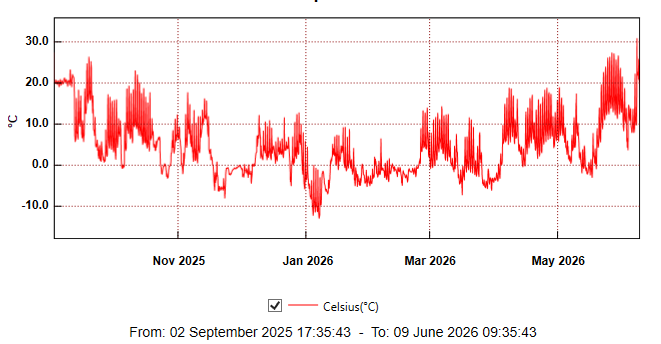
September 2025 to June 2026 temperature profile at ca. 1800 m asl
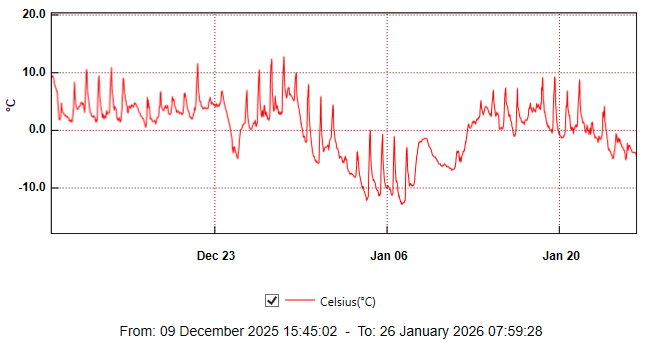
9th December 2025 to 26th January 2026 data in more detail
Results
You can see from the plot of the data that we have temperature information from 2 September 2025 to 8 June 2026. The start and end data correspond to the logger at home (UK) so are in the 20 C range.
The mountain data corresponds to mid September to early June. You can clearly see the lowest temperatures dropping as we get into December and January with the lowest recorded temperature of about -12C around January 7th 2026.
There are many high temperatures as well during these cold days, and these must correspond to sunlight directly shinning on the logger (even though it was in a gully and covered by a thin layer of bush). A nightly low of -10 C might be elevated to 0 C at these times. Sometimes we get double highs in a day which might correspond to varying cloud cover or the odd times direct sunlight managed to get between rock and mountain obstructions.
It is possible that thick snow on top of the data logger might effect the temperatures that have been logged. The location was a large boulder on a steep slope so its unlikely that the snow would be very thick and the large daily variations (presumably due to sunlight) in the temperture suggest the snow was not too thick.
In summary the lowest overall temperatures were recorded in January: -10 C at 1800 m asl in this location.
The lowest recorded temperature was about -12C around January 7th 2026.
Between mid-November and mid-March average temperatures were (as expected) below freezing and often -2 C, but -4 or -5 C were common.
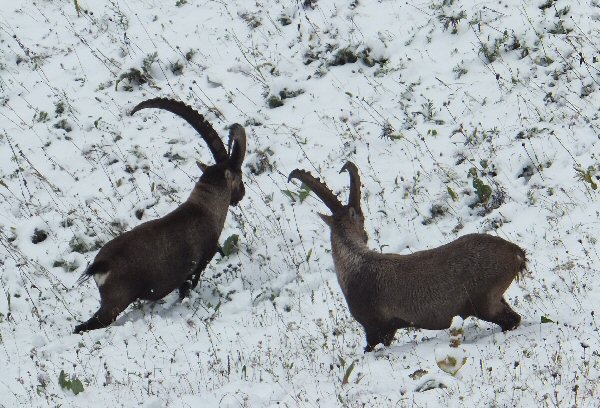
Wind chill v no wind chill
There is a difference between how a particular temperature feels with and without wind - the so called 'wind chill factor'. Being a machine the logger will record the non wind-chill temperature.
I noticed that the rugged bushes at high altitude are often hollowed out in the middle and I guess that when the snow falls the mountain goats can remove the inner snow to create an effective wind shelter. This would probably be life saving, reducing the wind chill effect, which must be very considerable on a winters night with very high winds at these high altitudes.
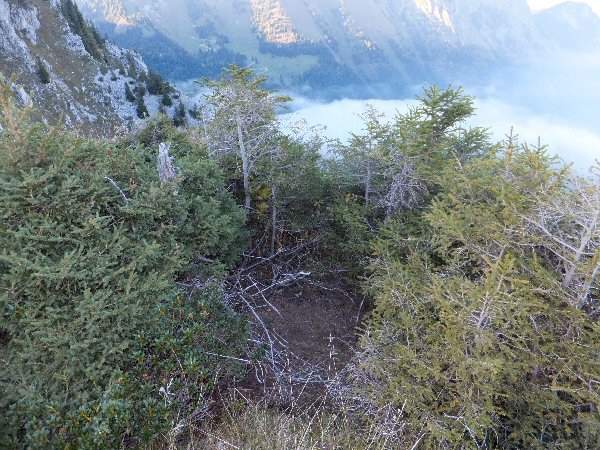
hollowed out bushes / trees for snow covered winter shelter?

wide angle of the area in which the temp. logger was located
Dr Jonathan Hare, E-mail: jphcreativescience@gmail.com
NOTE: Although none of the experiments shown in this site represent a great hazard, neither the Creative Science Centre,
Jonathan Hare nor The University of Sussex can take responsiblity for your own experiments based on these web pages.
THE CREATIVE SCIENCE CENTRE
home | diary | whats on | CSC summary | latest news